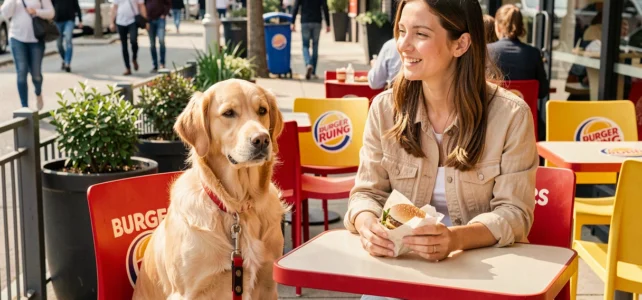
In France, no national Burger King charter publicly addresses the welcome of dogs in its restaurants. Health regulations provide the reference framework, but their application varies from one establishment to another, creating a persistent ambiguity for dog owners who wish to stop for a bite to eat with their pet.
Franchise and local autonomy: why the rules change from one Burger King to another
Burger King operates in France under a franchise model. Each restaurant is run by an independent franchisee who manages their establishment on a daily basis. This organization has a direct consequence: the policy regarding the welcome of animals is not decided at headquarters, but by each manager.
Recommended read : Everything You Need to Know About Sizing at Tommy Hilfiger: Guide and Tips for Making the Right Choice
One franchisee may allow small dogs inside, another may categorically refuse them, while a third may only accept them on the terrace. No unified national directive governs dog access in French Burger Kings. Community listings, such as those published on EmmeneTonChien.com, illustrate this disparity well: a Burger King in Ingré (Loiret) accepts a dog weighing less than ten kilos, while other establishments refuse any animals.
This situation explains why online testimonials contradict each other. One customer recounts having dined without issue with their shiba inu on the bench, while another was turned away at the entrance with a similarly sized dog. For anyone seeking to know whether dogs are allowed at Burger King as part of an official policy or a local arrangement, the answer is summed up in one word: the franchisee decides.
See also : Everything You Need to Know About Home Loans: Tips, Tricks, and Financing Solutions
French health regulations and dogs in fast food
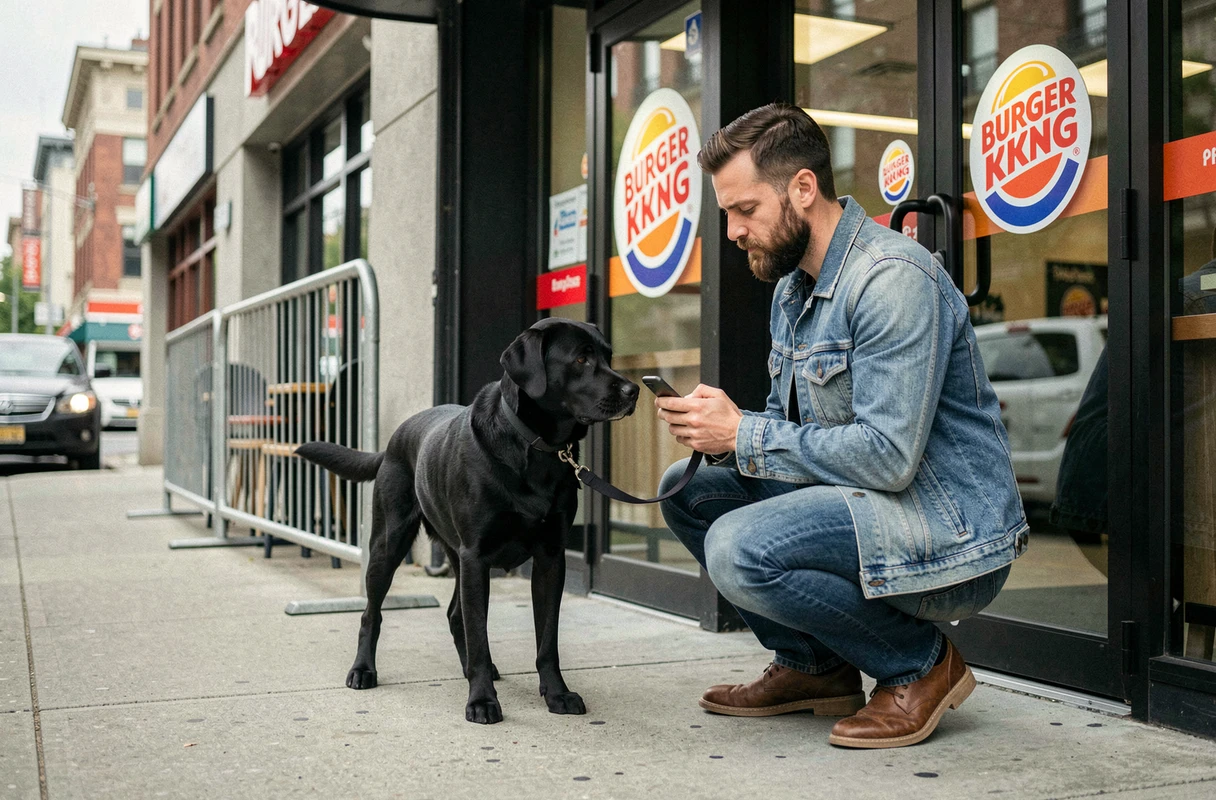
The applicable legal framework is based on food hygiene rules. Pets are prohibited in food preparation and consumption areas. This prohibition aims to prevent any risk of contamination in places where food items are handled or served.
The law does not explicitly mention outdoor terraces. This legal silence creates a gray area that each operator interprets in their own way. In practice, the terrace remains the place where tolerance is most common, as the space is open and the perceived health risk is lower.
Guide dogs and assistance dogs: a non-negotiable exception
The regulations make a clear distinction between ordinary pet dogs and assistance dogs. A guide or assistance dog must be admitted to any establishment open to the public, including restaurants. This right does not depend on the goodwill of the manager: it is a legal obligation related to accessibility for people with disabilities.
Several online contents confuse this obligation with a general tolerance towards dogs. The two situations are entirely different. A restaurateur who refuses an assistance dog exposes themselves to penalties, while refusing a regular pet dog falls under their rights as an operator.
Terrace, drive-thru, and transport bag: the concrete options
In the absence of a uniform rule, three solutions frequently arise in feedback from dog owners.
- The outdoor terrace is the most commonly tolerated option. When the restaurant has one, a leashed dog is often accepted there, provided it remains calm and does not disturb other customers.
- The drive-thru allows customers to pick up their order without leaving the car. The dog stays in the vehicle, so no access issues arise. This is the simplest solution when the establishment refuses animals inside.
- A transport bag or small dog stroller is sometimes tolerated inside certain restaurants. This tolerance remains rare and depends entirely on the manager. It mainly concerns very small dogs.
Calling the restaurant before going remains the only reliable method. Online reviews can sometimes be several months old, and a change of manager can alter the welcome policy overnight.
What dog-friendly directories do not always say
Community platforms list establishments that accept dogs. These listings are based on individual testimonials, not on verification with the brand. A mention of “dog welcome” means that a user was accepted once with their animal, under specific conditions (dog size, time, staff mood).
A community listing does not guarantee a permanent welcome policy. The manager may impose size restrictions, limit the number of dogs, or change their mind after an incident. In Germany, for example, the law explicitly leaves the choice to the operator, who can set internal rules regarding leashes, allowed areas, or weight limits. The principle is similar in France.
The available data do not allow for a comprehensive list of French Burger Kings that accept dogs. Feedback from the field varies on this point, even for the same restaurant a few months apart.
Precautions to take before coming with your dog
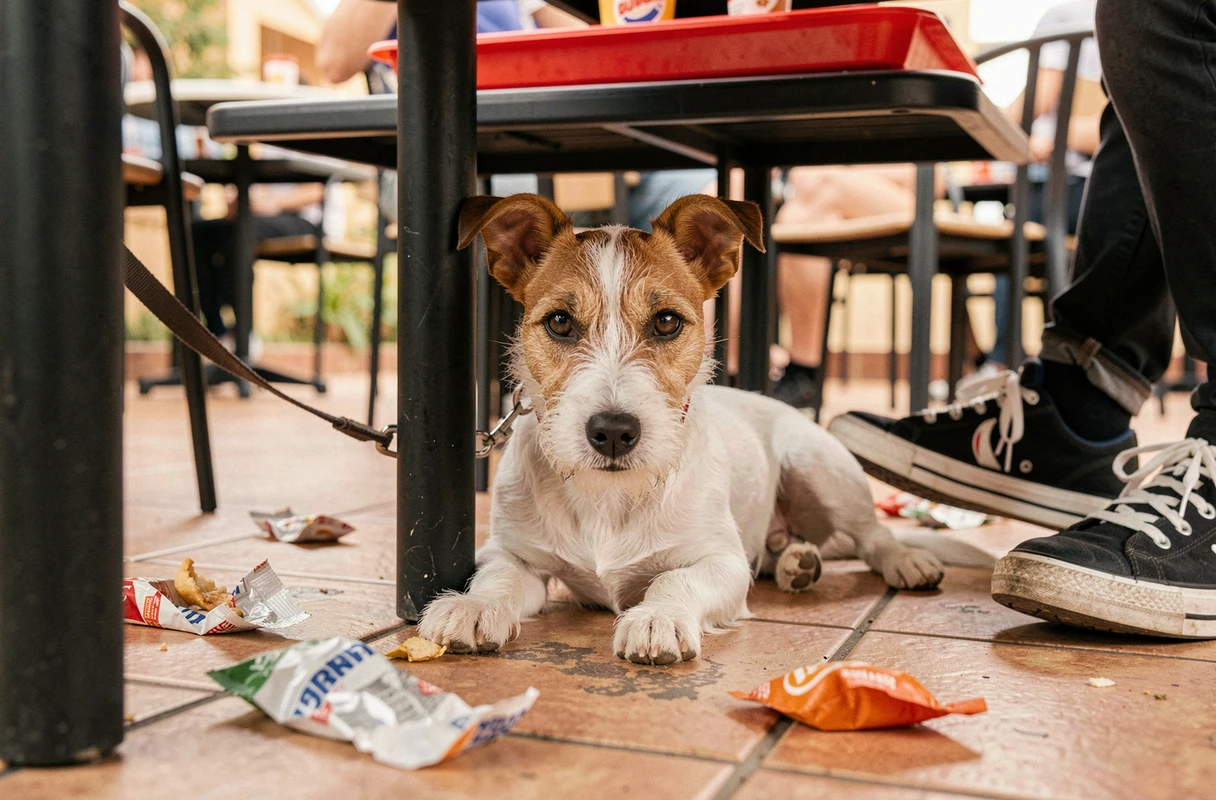
If you plan to visit a Burger King with your dog, a few precautions can reduce the risk of refusal or misunderstanding.
- Call the targeted restaurant to ask if dogs are accepted, specifying your animal’s size.
- Keep your dog on a short leash and ensure it is clean, calm, and sociable in a noisy environment.
- Bring a water bowl and a mat for your dog to lie down on without direct contact with the establishment’s floor.
- Always have an alternative in mind (drive-thru, another restaurant) in case the manager refuses access.
The refusal of a manager is not contestable for an ordinary pet dog. Only the refusal of an assistance dog constitutes an infringement. Accepting the restaurant’s decision, even if it differs from what has been read online, avoids conflictual situations that are detrimental to all dog owners.
The situation of dogs at Burger King in France remains a local matter, dependent on the franchisee, the restaurant’s layout, and the time. As long as no national policy is published by the brand, making a phone call beforehand remains the safest reflex.