
On a renovation site, the choice of window manufacturer is rarely based on a technical sheet read in-store. It is determined the day the installer discovers a frame in poor condition, a masonry opening that is out of square, or missing peripheral insulation. This is when the true quality of a manufacturer is revealed: their ability to provide joinery that is suited to the reality of the existing structure, not just to a catalog of standard dimensions.
Total removal in renovation: the true test for a window manufacturer
When replacing windows in an old house, there are two options: renovation installation (keeping the old frame) and total removal (removing everything, including the existing frame). Total removal is more expensive and lengthens the project, but it is the only method that allows for proper insulation treatment at the level of the opening.
You may also like : How to Choose the Perfect Bag for Every Occasion and Stay Trendy
The problem is that not all manufacturers offer solutions designed for this scenario. Some catalogs are limited to windows designed for new builds or installation on existing frames. However, in total removal, we need profiles compatible with varying wall thicknesses, adjustable insulation strips, and sometimes custom dimensions to compensate for the irregularities of the structural work.
A manufacturer suited for heavy renovation offers ranges with modular width frames and finishing accessories (covers, drip caps, joint covers) that absorb the discrepancies between the joinery and the masonry. This is a concrete criterion for distinguishing brands, far beyond a simple comparison of PVC versus aluminum.
Related reading : How to Choose the Best Real Estate Services to Succeed in Your Project in France
To identify high-quality window manufacturers capable of meeting these constraints, it saves time to directly check their custom offerings and their network of certified installers.
Large format windows: why material is no longer enough as a criterion
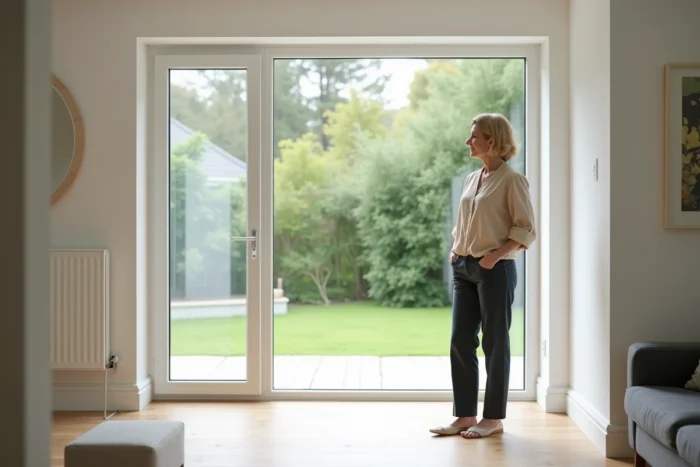
It is often said that PVC offers the best value for money and that aluminum is favored for design. This is true for standard-sized windows. However, when it comes to large openings (sliding glass doors, panoramic windows), the situation changes.
Aluminum remains the reference material for large formats due to the rigidity of its profiles. PVC, in intermediate dimensions, has become more competitive with newer reinforced profiles. However, beyond a certain glazed area, PVC reaches its structural rigidity limits and requires steel reinforcements that add weight to the sash and complicate operation.
This point is rarely addressed in standard comparisons, which typically focus on a material-by-material opposition without specifying size thresholds. When planning a renovation with large openings, it is essential to check with the manufacturer the maximum dimensions guaranteed by range and material. A serious manufacturer communicates these technical limits clearly.
After-sales service and follow-up: what separates a good manufacturer from a mere supplier
The lifespan of a quality window easily exceeds two decades. During this period, one may need to replace a seal, a cracked pane, a faulty locking mechanism, or a roller on a sliding door. And this is where many homeowners become disappointed.
Availability of spare parts over time
Some manufacturers guarantee the availability of spare parts for ten years or more after a range is discontinued. Others stop supplying components as soon as a model is removed from the catalog. Checking the spare parts policy before purchase helps avoid having to replace an entire window due to a hardware issue.
Network of certified installers and local intervention
A manufacturer that sells exclusively online or through large retailers does not provide the same support as an industrial company backed by a network of certified carpenters. In the event of a post-installation issue (water infiltration, condensation between panes, air leakage), one needs a contact who can diagnose whether the defect originates from manufacturing or installation.
Feedback on this point varies by region and installers, but a manufacturer that trains and certifies its installers offers better traceability in case of disputes.

Measurable thermal comfort: the indicators to demand from the manufacturer
Thermal insulation is often discussed without specifying what is being measured. To compare window manufacturers on objective grounds, three indicators matter:
- The Uw coefficient (in W/m².K) measures the thermal performance of the complete window (frame + glazing). The lower it is, the better the insulation. It is the only coefficient that reflects reality, unlike the Ug which only concerns the glazing itself.
- The solar factor (Sw) indicates the window’s ability to let in sunlight. In renovations, a high Sw is sought on south-facing facades to benefit from free solar gains in winter.
- The sound insulation index (Rw, in dB) should be considered if the house is located in a noisy area. A difference of a few decibels between two ranges significantly affects perceived comfort.
Not all manufacturers communicate these three values transparently. When a catalog only mentions the Ug without providing the Uw, it is a warning sign: the claimed performance does not take into account the frame, which is often the thermal weak point of the joinery.
Custom solutions and site constraints: the criterion that distinguishes manufacturers in renovation
The market increasingly values manufacturers capable of offering custom solutions suited to existing homes. A standard window installed in an irregular opening results in makeshift coverings, thermal bridges, and rough finishes.
- Check that the manufacturer accepts atypical dimensions (non-standard lintel heights, narrow openings, arched shapes).
- Ask if the manufacturer provides a complete installation kit for total removal, including support pieces, drip caps, and finishing profiles.
- Ensure that the custom manufacturing lead time aligns with the project schedule, as some manufacturers announce several additional weeks for non-standard requests.
A high-quality window manufacturer stands out precisely for their ability to accommodate the constraints of an old structure without makeshift solutions. The quality of a window is also measured by the quality of its integration into the wall, not just by its laboratory performance.
The final choice rests on a combination of criteria rarely found in a single comparison: suitability for total removal, transparency regarding thermal coefficients, long-term after-sales policy, and flexibility of custom solutions. Cross-referencing these four points with the actual constraints of your project remains the most reliable method to avoid regretting an investment that commits the house for the next two decades.