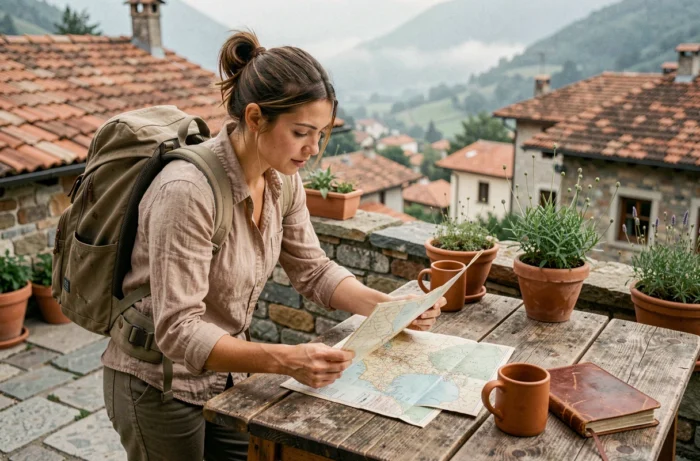
For many, traveling still boils down to ticking off monuments on a list and chaining beach photos together. The problem is that this pattern ends up producing the same memories from one trip to another. Offering original activities while traveling is primarily about changing the way we connect with a place, its inhabitants, and its rhythms.
Coolcations and fresh destinations: the activity starts with choosing the climate
Have you noticed that some classic beach destinations become hardly bearable in summer? This observation is pushing an increasing number of travelers towards what are called coolcations: stays in high altitudes, latitudes, or by lakes. The idea is simple: swap the overheated beach for a mountain refuge or a northern region.
This movement, which has clearly emerged in recent years, is not just about escaping the heat. Choosing a cooler destination also means avoiding the crowds concentrated on the coastlines. A lakeside stay in Scotland or a high-altitude hike in Guatemala offers a setting where outdoor activities remain feasible all day long, without the constraint of temperature peaks.
In France, mountain stays in spring are gaining popularity. This shifted seasonality opens access to less frequented trails, available accommodations, and softer rates. Rather than seeking originality in exoticism, it is found in the calendar shift, and this is exactly the type of approach found in the resources of Voyager en Découverte, which list concrete ideas for stepping off the usual paths.
Experiential travel: why the activity matters more than the destination
A recent report on global tourism trends highlights a structural shift. Travelers no longer define relaxing vacations as simply staying by a pool. They seek a reasonable amount of high-value activities.
In practical terms, this means that a five-day stay with two memorable experiences (a local cooking workshop, a kayaking trip in an estuary) leaves a denser memory than an entire week of idleness. The focus has shifted from the destination to what one does there.
Examples of high-memory activities
- Participating in a heritage restoration project in a village: learning a craft technique and interacting with locals around a common project
- Following a family geocaching route, where discovering a city turns into a treasure hunt with GPS coordinates and hidden clues
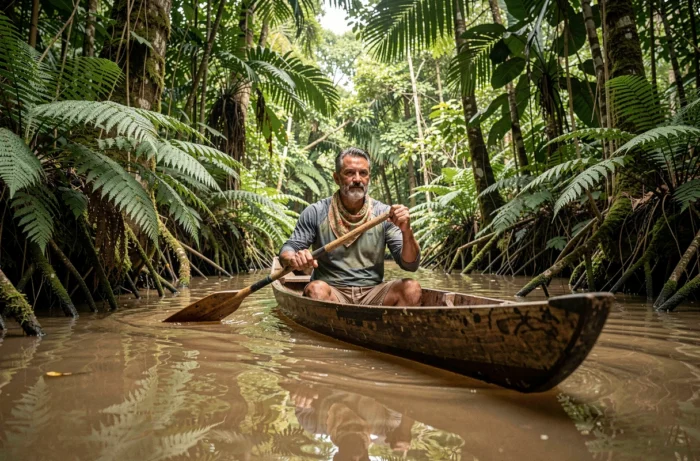
- Getting initiated to canoeing on a little-frequented waterway, which imposes a slow pace and attentive observation of the surrounding nature
- Spending a night in an unusual accommodation (treehouse, yurt, shepherd’s hut) to break away from the standardized hotel setting
The common thread of these activities: they engage the body, mobilize attention, and create interaction with the place. A selfie in front of a monument does not create the same grounding as a day spent paddling or building a dry stone wall.
Nostalgia and travel: the Y2K travel phenomenon
A more unexpected trend is emerging in how to conceive a stay. Some travelers choose their destinations and activities based on childhood memories or cultural references from the 2000s. This phenomenon, documented under the name Y2K travel, encourages revisiting places associated with films, series, or past family experiences.
This is not mere fan tourism. The approach involves rediscovering a specific emotion linked to a memory, then building a trip around that emotion. Returning to a seaside resort visited as a child, retracing a train journey associated with a specific period in one’s life: the activity becomes a pretext to reconnect travel to a personal and emotional dimension.

This angle is rarely explored in traditional guides, which focus on novelty. Here, the value of travel does not come from the unknown but from a voluntary and conscious return to a place already known under a different perspective.
Family activities and city exploration: going beyond the tourist guide
Traveling differently with children means letting go of the idea that you need to “occupy” the youngest. The most memorable family activities are those where adults and children share the same level of discovery.
In the city, three game-changing approaches
- Replacing the guided tour with a themed walking exploration (spotting all the architectural details of a period, photographing the oldest doors in a neighborhood)
- Choosing a local food market as a starting point: buying unknown ingredients, then figuring out how to cook them together
- Organizing a day without a plan, where every decision (direction, meal, stop) is made collectively at random, in the manner of experimental tourism theorized by Joël Henry
This last point deserves attention. Experimental tourism proposes specific rules of play applied to travel. For example, opening an atlas at random and going to the nearest point of the designated location. Or following a stranger down the street for ten minutes to see where it leads. The playful framework transforms movement into experience, even in a city one already knows.
These methods work equally well in a large metropolis or a small provincial town. They cost nothing, require no reservations, and produce stories that are still told years later.
The travel that leaves a lasting mark is almost never the one where everything was planned. It is the one where one accepted to lose a bit of control, to follow an unexpected lead, or to dedicate half a day to an activity that was not in any guide. The best preparation sometimes consists of leaving room for what was not scheduled.