DIY in France is no longer just about buying a drill and a can of paint. The sector is undergoing a transformation where distribution, environmental regulations, and business models are being reconfigured simultaneously. The tools are changing, but it is mainly the sales channels and legal obligations that are reshaping the market.
Reuse and second-hand in DIY: an emerging sector
The second-hand market for DIY tools and equipment is gradually moving out of the informal circuit between individuals. Retailers are beginning to integrate processes for qualification, refurbishment, and automated pricing, relying on artificial intelligence algorithms to assess the condition and residual value of a product.
This structuring changes the game. A second-hand screwdriver is no longer sold solely on a general marketplace: the distributors themselves organize the buyback and resale. According to Orisha, AI-assisted repricing allows DIY retailers to handle volumes of second-hand products that would be unmanageable manually.
Meanwhile, Ecomaison is working to organize the second life of household items, including tools and small garden equipment. Reuse is moving from a militant logic to an infrastructure with collection, sorting, and redistribution channels. To keep up with the latest news on Univers du Bricolage, this trend towards structured reuse is one of the most concrete developments in the current market.
REP obligations and battery regulations: what changes for cordless tools
The European regulatory framework now directly impacts the design and sale of DIY products. The REP (extended producer responsibility) system requires manufacturers and distributors to finance the collection and treatment at the end of life of many product categories, from electrical equipment to furniture components.
The anti-waste AGEC law accelerates this movement in France. DIY and garden retailers must check their compliance, particularly regarding the free take-back of old items. This is no longer a marketing option: it is a legal obligation that structures the logistical flows in stores.
Lithium-ion batteries: a regulatory point of vigilance
Cordless tools dominate the market, but their lithium-ion batteries fall under specific regulations. The new European obligations on batteries impose requirements for traceability, minimum durability, and collection.
For consumers, this translates into several concrete consequences:
- Manufacturers must guarantee a minimum lifespan for batteries and provide information on their actual capacity, not just nominal
- The take-back of used batteries becomes mandatory at the point of sale, facilitating recycling but complicating in-store management
- Multi-battery platforms (one format for several tools of the same brand) are becoming more relevant, as replacing a battery often costs as much as an entry-level tool
This regulation favors brands that invest in the durability of their batteries rather than in the accelerated renewal of product lines.
Durable tools and eco-design: beyond the green label
Eco-design in DIY is not limited to placing a logo on recycled packaging. It touches on the very design of products: modularity of parts, reparability, choice of low-impact materials.
A repairable tool extends its lifespan by several years compared to a disposable model sold for a few euros less. Manufacturers who document their spare parts and facilitate disassembly gain a real competitive advantage, especially as French regulations push in this direction with the reparability index.
Less energy-intensive materials and processes
Some manufacturers are also rethinking the materials of their hand tools. We find handles made from recycled composites, machine housings made from regenerated plastic, and packaging reduced to the strict minimum.
The gardening sector is following the same trajectory: pruning tools, spades, and secateurs incorporate more durable steels to limit replacement. Durability is becoming a measurable selling point, not just a slogan.
Connected DIY and AI: what really helps in daily life
Connected tools have been around for several years, but their adoption remains uneven. The solutions that work are those that address a concrete problem rather than an abstract technological promise.
Among the useful applications for daily life:
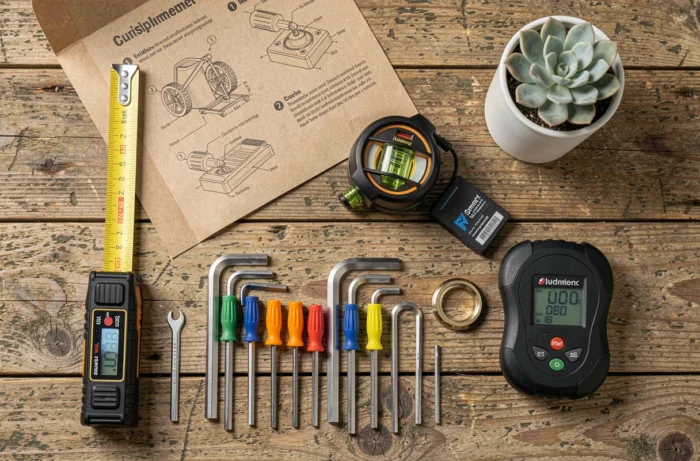
- Wall structure detectors connected to smartphones, which display in real-time the position of studs, wires, and pipes before drilling
- Self-leveling laser levels that can be remotely controlled, allowing for solo work on renovation sites
- Energy consumption tracking apps post-work, useful for verifying the actual effectiveness of insulation or window changes
Artificial intelligence is also involved in distribution. Retailers use AI solutions to adjust their stocks, personalize product recommendations, and manage the flow of second-hand items. For consumers, this results in a more reliable product availability and better-targeted suggestions.
The DIY market in France is transforming less through the tools themselves than through the ecosystem surrounding them: regulations, reuse, and traceability of components. DIY enthusiasts who follow these developments make more sustainable purchasing choices and, ultimately, more economical ones.