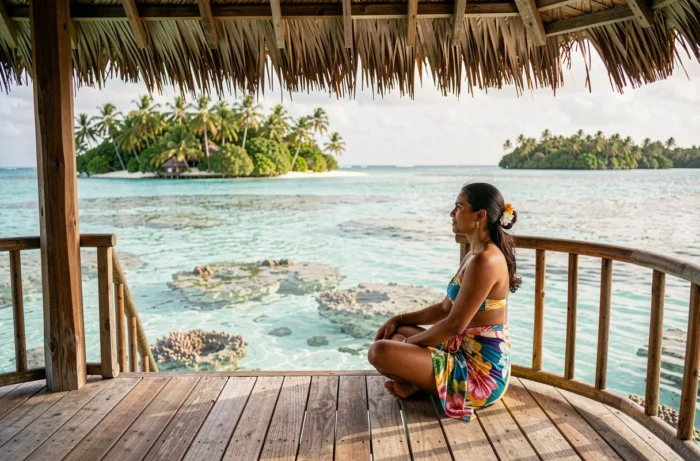
French Polynesia covers an oceanic area comparable to that of Europe, but its 118 islands total a modest land area. With 281,227 tourists welcomed in 2025 (an increase of 6.6% year-on-year according to the Institute of Statistics of French Polynesia), the pressure on the most well-known sites is increasing. Comparing these destinations with each other, island by island, allows us to measure what each truly offers and where the visitor numbers weigh the most.
Comparison of the five Polynesian destinations by archipelago and profile
| Destination | Archipelago | Dominant Profile | Visitor Level | Recent Constraint |
|---|---|---|---|---|
| Bora Bora | Society | Lagoon, overwater bungalows | High | No specific restrictions |
| Moorea | Society | Hiking, whale watching | High | Strengthened whale regulations (December 2024) |
| Huahine | Society | Preserved nature, archaeology | Moderate | No specific restrictions |
| Fakarava | Tuamotu | Diving, UNESCO biosphere reserve | Low | No specific restrictions |
| Maupiti | Society | Authenticity, family guesthouses | Low | Wild camping banned since July 2026 |
This table highlights a clear gap between the two major tourist poles (Bora Bora and Moorea) and the islands that remain away from the main flow. The rest of the article details these gaps and the concrete consequences for a trip to Polynesia.
To delve deeper into the selection of these places, a supplementary file is available on the Infos du Jour website with a detailed ranking by type of experience.
Bora Bora and Moorea: two distinct islands of the Society
Bora Bora concentrates the majority of high-end accommodations in French Polynesia. Its lagoon, surrounded by a nearly continuous barrier reef, offers ideal conditions for snorkeling and canoe excursions. Mount Otemanu dominates the volcanic landscape, but hiking there is limited compared to other islands.
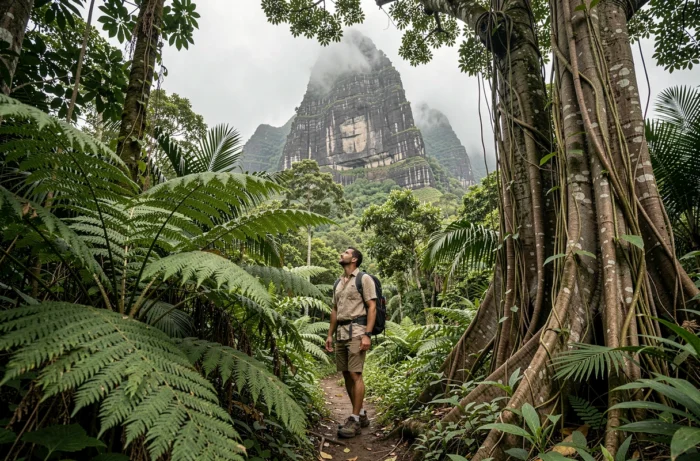
Moorea features a more rugged terrain. Cook Bay, deeply nestled between volcanic ridges, is one of the most photographed landscapes in the South Pacific. In contrast, Moorea stands out for its more varied land access: hiking trails to viewpoints, pineapple plantations in the interior valleys, and coastal villages that are less commercialized than the hotel areas of Bora Bora.
The visitor gap between these two islands is narrowing year by year. Moorea is absorbing an increasing share of visitors due to its proximity to Tahiti (ferry connection) and more affordable accommodation rates than those in Bora Bora.
Whale watching in Moorea: a tightened regulatory framework
Since December 1, 2024, regulations impose a 100-meter exclusion zone for boats around whales and a 15-meter safety zone for swimmers. The observation duration is limited, and the number of people allowed during water entry is restricted.
These measures concretely change the experience. Providers are reducing the size of their groups, which may extend booking times during the season (July to November, when humpback whales are present).
Huahine and Fakarava: two less saturated alternatives
Huahine, often referred to as the “Polynesian Eden,” remains off the beaten tourist paths despite being part of the Society archipelago. The island retains some of the best-preserved archaeological remains (marae) in Polynesia. Its dense vegetation, sacred eels, and less frequented lagoons make it a direct counterpoint to Bora Bora.
- The lagoon of Huahine allows for snorkeling in calm conditions, without the density of boats observed in Bora Bora
- Family guesthouses dominate the accommodation offer, with rates significantly lower than those of resorts in Bora Bora or Moorea
- The network of marae (ceremonial sites) offers a cultural dimension absent from more touristy islands
Fakarava belongs to the Tuamotu archipelago, a string of coral atolls located several hundred kilometers northeast of Tahiti. Designated a UNESCO biosphere reserve, this atoll primarily attracts divers. The south pass of Fakarava concentrates an exceptional density of gray sharks, a phenomenon that makes it one of the most renowned diving sites in the world.
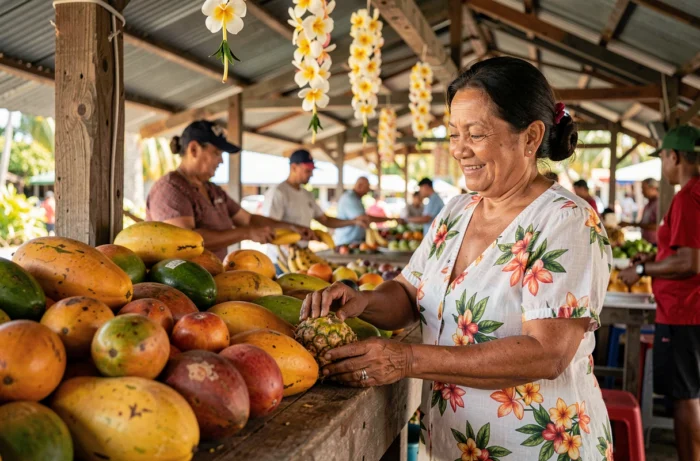
The Pink Sands, sandbanks with coral reflections accessible only by boat, enhance Fakarava’s appeal for visitors who do not dive. The limited hotel capacity of the atoll naturally restricts visitor numbers.
Maupiti: a case study of regulated tourism in Polynesia
Maupiti is the smallest inhabited island of the Society archipelago, boasting a lagoon comparable to that of Bora Bora, but with no chain hotels. Accommodation relies exclusively on family guesthouses.
Since July 29, 2026, wild camping is prohibited on beaches, public land, and undeveloped natural areas. Only registered accommodations and authorized campgrounds remain accessible. This measure aims to protect the coastline against a level of visitation that, although low in absolute volume, exceeds the absorption capacity of such a small island.
For travelers, the direct consequence is simple: booking accommodation in Maupiti several months in advance becomes necessary, especially in high season (June to October). With the number of guesthouses being limited, spots fill up quickly.
What Maupiti offers despite the constraints
The summit of Mount Teurafaatiu can be climbed in a few hours and provides a 360-degree panorama of the lagoon and surrounding motus. Crossing the lagoon on foot, possible at low tide between certain motus, remains an experience that Bora Bora no longer allows due to the hotel development of its islets.
The increase in tourist visitation in French Polynesia, combined with new regulations on sites like Maupiti or for whale watching, is reshaping access conditions to these five destinations. The less saturated islands (Huahine, Fakarava, Maupiti) are gaining attractiveness precisely because they impose limits. For an itinerary in Polynesia, cross-referencing visitor levels with local regulatory constraints provides a more reliable filter than a simple list of turquoise lagoons.