
An error on a residence permit refers to any discrepancy between the information printed on the document (name, date of birth, nationality, category of residence) and that on the holder’s passport or civil status document. This type of error, whether it arises from incorrect data entry by the prefecture or from data poorly transmitted via the ANEF platform, can block administrative procedures, a renewal, or even a trip.
Material error and substantial error on a residence permit: two distinct regimes
Before any action, it is essential to identify the nature of the error. This distinction determines the procedure, timelines, and documents to provide.
A material error corresponds to a typographical or spelling mistake: a reversed letter in the name, an incorrect digit in the date of birth, a typo in the place of birth. The administration generally recognizes this type of anomaly without difficulty, as a comparison with the passport is sufficient to demonstrate it.
A substantial error concerns a substantive element: incorrect category of permit (a “visitor” permit issued instead of a “worker” permit, for example), incorrect validity duration, or erroneous mention of the right to work. This second case is more complex, as it implies that the prefecture has misclassified the legal situation of the applicant.
To understand how to correct an error on a residence permit, one must first gather evidence of the discrepancy, then choose the appropriate channel based on the nature of the problem.
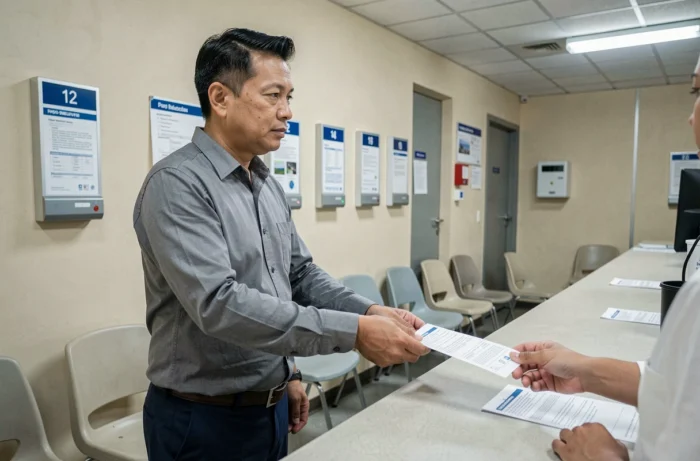
Reporting an error via the ANEF platform: recent documentary requirements
The majority of reports now go through the holder’s ANEF account. Prefectures increasingly require a detailed written request accompanied by dated screenshots from the ANEF account and the erroneous documents to process the correction.
This requirement for digital documentation does not always appear in official guides. It responds to a need for traceability: the prefecture wants to compare the online status of the file with the physical title produced.
Documents to attach to the report
- A readable copy of the residence permit containing the error, front and back, with the anomaly highlighted or indicated.
- A copy of the valid passport (identity page), to establish the correct version of the name, date of birth, or nationality.
- Timestamped screenshots from the ANEF account showing the information entered when submitting the file, to prove that the error did not originate from the applicant.
- A letter or email written in French, precisely describing the observed error and the expected correction.
If the prefecture’s online contact form does not allow attaching these documents, sending a registered letter with acknowledgment of receipt (LRAR) remains the safest route. Keeping a copy of each submission is necessary for any future appeal.
Certificate of extension of processing: protecting one’s rights during the correction
The processing time for a correction varies by prefecture. During this period, the erroneous title may pose problems for working, traveling, or accessing certain social rights.
Since a ruling by the Council of State on May 5, 2026 (n° 502860), it has been reiterated that the prefect must issue a certificate of extension of processing to the holder who requests the renewal of their title, without requiring any specific action, even when the file contains errors to be corrected.
This certificate secures the applicant’s situation: it maintains the right to stay and, depending on the case, the right to work throughout the duration of the processing. Lawyers specialized in immigration law confirm that this document is increasingly used to avoid disruptions of rights related to an uncorrected material error.
Requesting the certificate in practice
When submitting the correction or renewal request, it is sufficient to check that the prefecture has generated this certificate in the ANEF account. If it does not appear, an email to the prefecture’s foreign affairs department, mentioning the file reference and the Council of State jurisprudence, usually helps to resolve the situation.

Appeal in case of refusal or lack of response from the prefecture
Some prefectures do not respond to the report or refuse the correction, claiming that the error originates from the applicant. Two avenues for appeal exist.
The gracious appeal involves sending a letter to the prefect, reattaching all supporting documents. This appeal suspends the deadline for a contentious appeal and obliges the administration to re-examine the request. The absence of a response within two months constitutes an implicit rejection.
The contentious appeal before the administrative court occurs after the failure of the gracious appeal. The judge can then order the correction of the title. For substantial errors (incorrect category of title, erroneous duration), the administrative court is often the only means to obtain a correction when the prefecture contests its own error.
Anticipating common blockages
- Keep a complete history of exchanges with the prefecture (emails, acknowledgments of receipt, ANEF screenshots): these elements constitute proof of the report and timelines.
- Check that the ANEF file is not blocked by a technical bug. Some users report being unable to modify or complete their file online, which requires a parallel report by LRAR.
- In case of planned travel, request a provisional certificate from the prefecture mentioning the error and the ongoing correction procedure, to avoid problems at airport controls.
A discrepancy between the date of birth on the residence permit and that on the passport can lead to boarding refusal or complications upon return to France. As long as the correction is not effective, traveling with the erroneous title remains risky, even with a valid passport.
The correction of an error on a residence permit relies on rigorous documentation from the moment of reporting. The certificate of extension of processing, now confirmed by recent jurisprudence, constitutes the main safety net to maintain one’s rights throughout the duration of the procedure.