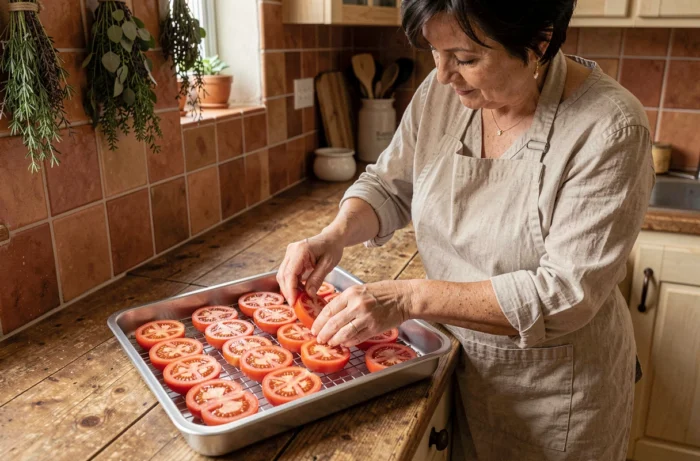
The tomato is a fruit with a high water content, making it one of the most challenging foods to dehydrate properly. Mastering a few specific parameters transforms a mediocre result into a stable product, concentrated in flavor and storable for several months without refrigeration.
Residual moisture threshold and jar condensation test
A successful drying cannot be judged by sight. We recommend aiming for a residual moisture level below 15-20% to prevent microbial growth. Beyond this threshold, molds find a favorable environment, even in an airtight container.
The most reliable home verification method remains the jar test. Place your dried tomatoes in an airtight jar for 24 hours at room temperature. If condensation droplets appear on the walls, the drying is insufficient: return the tomatoes to the dehydrator.
This simple check prevents the loss of entire batches. We observe that most domestic preservation failures stem from drying being interrupted too early, often due to impatience or poor tactile assessment.
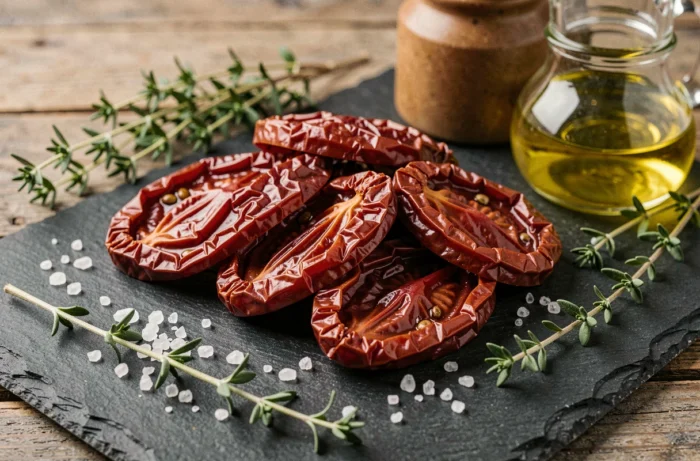
To delve into each step of the process, a detailed dehydrator dried tomato recipe allows for precise calibration of times based on slice thickness and the model of the device used.
Slicing and arranging on dehydrator trays
The thickness of the slices directly affects the drying time and the uniformity of the result. Slices that are too thin burn on the surface before the center dries. Slices that are too thick retain invisible pockets of moisture.
Cutting in half (for cherry tomatoes) or into quarters (for Roma-type varieties) offers the best compromise. Always remove the seeds and the gel surrounding them: this area concentrates most of the free water and significantly slows down the drying process.
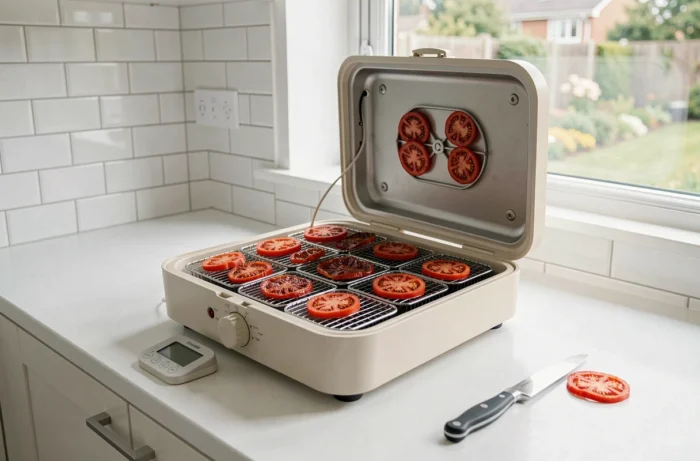
- Place the pieces skin side down on the trays, without overlapping, to allow for regular air circulation between each piece.
- Leave at least one centimeter of space between the pieces: the air flow from the dehydrator must circulate freely over the entire surface.
- Alternate the position of the trays halfway through drying if your device does not have uniform horizontal ventilation (especially vertical flow models).
Fleshy and low-water varieties yield the best results. Roma, San Marzano, and heart-shaped tomatoes have a favorable flesh-to-water ratio. Large beefsteak-type tomatoes contain too much free water and produce a low yield.
Drying temperature and time management in the dehydrator
Drying tomatoes requires a moderate temperature over a long duration. Increasing the temperature to speed up the process causes an outer crust to form that traps moisture inside, a phenomenon known as case hardening.
The temperature range to adhere to is in the lower zone of the vegetable setting of most home dehydrators. Complete drying usually takes between eight and twelve hours depending on the thickness of the pieces, the ambient humidity level, and the power of the device.
Signs of proper drying
The target texture depends on the intended use. For direct consumption or rehydration in cooking, aim for a soft but non-sticky texture to the touch. No moist area should remain when you fold a piece between your fingers.
For a tomato powder reduction, continue drying until you achieve a brittle and crumbly texture. This powder lasts longer and integrates directly into sauces, soups, and marinades.
Cooling and packaging for preservation
Cooling is a technical step often rushed. Leaving the tomatoes to cool too long in the open air exposes the product to reabsorption of ambient moisture. We recommend a cooling period of 30 to 60 minutes maximum before jar placement.
Beyond this window, the tomatoes reabsorb moisture from the air, especially in summer or in a humid kitchen. This phenomenon partially negates the dehydration work and compromises preservation.
Storage options based on use
- In an airtight jar at room temperature, away from light: preservation for several months for properly dried tomatoes below the residual moisture threshold.
- Immersed in olive oil with herbs (thyme, oregano, basil, garlic): a method that enhances flavor but requires refrigeration after opening.
- Vacuum-sealed for long-term storage: an ideal option if you are dehydrating large volumes in peak season.
- Ground into powder in a spice grinder: tomato powder can be stored in an airtight container and serves as a great substitute for industrial concentrate.
Regardless of the chosen storage method, always perform the jar test before final packaging. A poorly dried batch contaminates the rest of the stock.
Seasoning before or after dehydration
Salting the tomatoes before drying speeds up water extraction through osmosis. The salt attracts surface moisture, which slightly reduces the total drying time. However, the salt concentrates during dehydration: use it sparingly.
Dried herbs (oregano, thyme, basil) are preferably added before going into the dehydrator. They adhere better to the moist surface of the fresh tomato. Garlic powder also works well as a pre-seasoning, but fresh garlic is likely to burn during a long cycle and develop an unpleasant bitterness.
For preparations intended for olive oil, we prefer to season after drying, at the time of jar placement. Fresh herbs infuse directly into the oil and retain all their aromatic complexity.
The final yield is always surprising: one kilogram of fresh tomatoes yields a modest amount of dried tomatoes, as the water loss is massive. Plan your volumes accordingly, especially if you want to build a stock for the cold season.